Showing posts with label China. Show all posts

Taoism: Beliefs in China and Taiwan

yinyang

“Be still like a mountain and flow like a great river” Lao Tse.

Tao, or “Dow,” can be described in English as “the path” or “the way,” but has no clear definition. It is a reference to some type of power that flows through all animate and inanimate entitles, and regulates the balance in the universe. It also recognizes the need of contrasts for balance; light and dark, man and woman, etc. The Yin Yang is a Taoist symbol.

History

The founder of Taoism is supposedly Lao Tse, who lived around the same time as Confucius, 604-531 BCE. However, it is not clear if Tao was actually a real person or a legend, nor a mixture of a few thinkers. Some believe he was an actual person seeking a way to avoid aspects of society like warfare, but others feel he was just mythical. Taoism began as a philosophy, but was turned into a state religion in 440 CE; it is one of the great philosophies of China along with Buddhism and Confucianism. Taoism had been oppressed during the strict communist control periods from 1949-1960, and during the cultural revolution from 1966 to 1976. Many temples and texts were destroyed. However, there is more tolerance and practice of this belief ever since 1982. There are about 20 million Taoists, mainly based in Taiwan.

tao

Beliefs and Practice

One Taoist belief is that the Tao is a force flowing through all aspects of life, and believers must harmonize themselves with this energy. It surrounds everyone, which gives everyone the chance to achieve enlightenment. They believe that time goes in a cyclical pattern, rather than linear. Health and vitality are very important to people’s lives.

Everyone must respect the air around them, as it gives them life. There are “Three Jewels” in Taosim: compassion, moderation and humility. Taoists believe that nature should have its natural flow, and you shouldn’t disturb that. Before taking actions, Taoists believe that humans should think about the consequences.

Some Taoists practice Tai Chi to maintain health. It is a practice to balance the energy flow that connects our bodies to our surroundings. It is believed to lower blood pressure and stimulate the central nervous system, as well as to loosen the tension in the muscles.


Learning and Understanding Confucianism: Chinese Philosophy


confuc

Confucianism is one of the backbones of Chinese culture and way of life. In China, this philosophy is blended with Taoism and Buddhism in much of the country. It is difficult to say how many people follow Confucianism, as it is not a registered philosophy or church, and few people describe themselves only as Confucianism followers. Nevertheless, it is essential to understand Confucianism if you are planning to move to China or other countries in East Asia.

Confucius, aka K’ung Fu Tzu, was born in 551 BC in the state of Lu, or modern-day Shantung, China, which was during the Chou Dynasty. Confucius opened a school when he was 22, and was then appointed Minister of Justice of Lu. He left his position and spent 13 years wandering around China and teaching philosophies to assorted rulers. He gained some followers, and then settled in Lu and continued to teach there, until he died in 479 BC. By today’s standards, he was a conservative thinker who valued order.

The main rules of Confucianism are as follows:

  • Li: Manners and etiquette
  • Hsiao: Love in the family
  • Yi: Righteousness
  • Xin: Honesty
  • Jen: Humaneness, Benevolence
  • Chung: Loyalty to the state and order

Confucius believed that one must obey the written laws of society. However, there must not be an abundance of arbitrary laws. For society to run smoothly, there should not be too many invasive laws.

Another essential belief is the five relationships:

  • Ruler to Subject
  • Father to Son
  • Husband to Wife
  • Elder Brother to Younger Brother
  • Friend to Friend

Needless to say, Confucius was not an egalitarian. The only one of these relationships that is on equal grounds is friend to friend. He believed that there needed to be hierarchy and order for greater society (or for a family, school etc) to function. Confucius also emphasized a respect for deceased ancestors. These beliefs and relationships were not solely for the living, but for all souls. Children must respect their parents greatly, and they owe a lot to their parents. However, those who are superior, like parents, owe benevolence and protection of the younger and more inferior people.

There are six sects of Confucianism: Han Confucianism, Neo-Confucianism, Contemporary Neo-Confucianism, Korean Confucianism, Japanese Confucianism and Singapore Confucianism. The philosophy has adapted to different times and separate cultures.

The world's largest dam is located in China


Flooding in central China feels the strength of the world's largest dam - Three Gorges. It is reported that it now to the limit - resets 70,000 cubic meters of water per second. This is a record. However, the water level every hour only grows. The consequences, according to the engineers, can be disastrous, especially considering that the flooding in the area have already left homeless tens of thousands of people and caused material damage to millions of yuan. Evacuate had about a million people.


Chinese Demolition Failed


The footage, taken on December 30, 2009, shows a 22-floor residential building being demolished in the city of Liuzhou, China. Instead of crumbling into a contained heap of rubble, half of the building crashes sideways to the ground, the other half is left still standing but leaning to the side.

Luckily there are no other buildings next to it, otherwise sure many people will be killed in this "Failed" demolition project, which was caused by technical reasons.


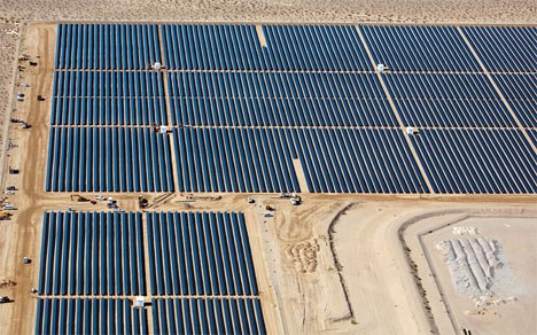
Worlds Largest "Solar Plant"


Arizona-based First Solar announced yesterday plans to construct the world’s largest solar plant in Ordos, China. When completed in 2019, the 2,000 megawatt Ordos solar farm will produce enough power to provide for 3 million homes. It’s a development that makes China, the second largest energy-using country, one of the biggest players in the solar energy game.


It seems like a new “world’s largest solar plant” or “world’s most efficient solar cell” is being announced every day, but the Ordos solar farm is an especially big deal–the 25 square mile, multi-billion dollar plant makes other solar projects look tiny by comparison. Other major projects in the works, such as First Solar’s 550-megawatt project in California and the US Army’s 500 megawatt solar thermal project in the Mojave Desert, don’t even come close to matching Ordos.


Still, renewable energy projects get scrapped or pared down all the time. That means it will be worth keeping an eye on Ordos, which is scheduled to begin the first of its four phases of construction in 2010, to see if it is actually completed. If it is, the country that is now the world’s biggest polluter could easily also become the world’s biggest renewable energy consumer.


Taoism: Beliefs in China and Taiwan

yinyang

“Be still like a mountain and flow like a great river” Lao Tse.

Tao, or “Dow,” can be described in English as “the path” or “the way,” but has no clear definition. It is a reference to some type of power that flows through all animate and inanimate entitles, and regulates the balance in the universe. It also recognizes the need of contrasts for balance; light and dark, man and woman, etc. The Yin Yang is a Taoist symbol.

History

The founder of Taoism is supposedly Lao Tse, who lived around the same time as Confucius, 604-531 BCE. However, it is not clear if Tao was actually a real person or a legend, nor a mixture of a few thinkers. Some believe he was an actual person seeking a way to avoid aspects of society like warfare, but others feel he was just mythical. Taoism began as a philosophy, but was turned into a state religion in 440 CE; it is one of the great philosophies of China along with Buddhism and Confucianism. Taoism had been oppressed during the strict communist control periods from 1949-1960, and during the cultural revolution from 1966 to 1976. Many temples and texts were destroyed. However, there is more tolerance and practice of this belief ever since 1982. There are about 20 million Taoists, mainly based in Taiwan.

tao

Beliefs and Practice

One Taoist belief is that the Tao is a force flowing through all aspects of life, and believers must harmonize themselves with this energy. It surrounds everyone, which gives everyone the chance to achieve enlightenment. They believe that time goes in a cyclical pattern, rather than linear. Health and vitality are very important to people’s lives.

Everyone must respect the air around them, as it gives them life. There are “Three Jewels” in Taosim: compassion, moderation and humility. Taoists believe that nature should have its natural flow, and you shouldn’t disturb that. Before taking actions, Taoists believe that humans should think about the consequences.

Some Taoists practice Tai Chi to maintain health. It is a practice to balance the energy flow that connects our bodies to our surroundings. It is believed to lower blood pressure and stimulate the central nervous system, as well as to loosen the tension in the muscles.

Learning and Understanding Confucianism: Chinese Philosophy


confuc

Confucianism is one of the backbones of Chinese culture and way of life. In China, this philosophy is blended with Taoism and Buddhism in much of the country. It is difficult to say how many people follow Confucianism, as it is not a registered philosophy or church, and few people describe themselves only as Confucianism followers. Nevertheless, it is essential to understand Confucianism if you are planning to move to China or other countries in East Asia.

Confucius, aka K’ung Fu Tzu, was born in 551 BC in the state of Lu, or modern-day Shantung, China, which was during the Chou Dynasty. Confucius opened a school when he was 22, and was then appointed Minister of Justice of Lu. He left his position and spent 13 years wandering around China and teaching philosophies to assorted rulers. He gained some followers, and then settled in Lu and continued to teach there, until he died in 479 BC. By today’s standards, he was a conservative thinker who valued order.

The main rules of Confucianism are as follows:

  • Li: Manners and etiquette
  • Hsiao: Love in the family
  • Yi: Righteousness
  • Xin: Honesty
  • Jen: Humaneness, Benevolence
  • Chung: Loyalty to the state and order

Confucius believed that one must obey the written laws of society. However, there must not be an abundance of arbitrary laws. For society to run smoothly, there should not be too many invasive laws.

Another essential belief is the five relationships:

  • Ruler to Subject
  • Father to Son
  • Husband to Wife
  • Elder Brother to Younger Brother
  • Friend to Friend

Needless to say, Confucius was not an egalitarian. The only one of these relationships that is on equal grounds is friend to friend. He believed that there needed to be hierarchy and order for greater society (or for a family, school etc) to function. Confucius also emphasized a respect for deceased ancestors. These beliefs and relationships were not solely for the living, but for all souls. Children must respect their parents greatly, and they owe a lot to their parents. However, those who are superior, like parents, owe benevolence and protection of the younger and more inferior people.

There are six sects of Confucianism: Han Confucianism, Neo-Confucianism, Contemporary Neo-Confucianism, Korean Confucianism, Japanese Confucianism and Singapore Confucianism. The philosophy has adapted to different times and separate cultures.

Learning the Business Customs in China

china

Many professional expats are looking to China for a new home. Many graduate from top-notch schools and cannot find their dream job in their home country, so they look to the East. Before considering such a move, you should familiarize yourself with some of the common business customs in China. Keep in mind that many of these customs are taken more seriously with older generations than with younger ones.

One key factor is that Chinese people often won’t like to do business with people they do not knowwork through an intermediary. This person should be a good representative to vouch for the legitimacy of your company. personally. It is a good idea, and sometimes completely necessary, to

If you are going on a business trip to China, you should also send out some materials about your company translated into Chinese describing its history, facts and figures, prior to your departure. The Chinese company will often use other intermediaries to send information back and ask further questions. You’ll be able to build business relationships through time, but you must be patient and willing to put up with a load of bureaucracy. Patience is an important value in China, reflected by the business world.

shang

Inspired by Confucianism, Chinese society is still very hierarchical, and this is true in the business world. A person’s rank in the company is taken very seriously, and you should be aware of this when communicating with others. High-ranking officials in the company are meant to be communicated with very formally. The business world and the social world usually do not mix. Do not discuss business matters outside of their proper environment.

In terms of meetings, you should make appointments well in advance, perhaps 4-8 weeks, in writing. If you have yet to meet someone from the company personally, you should have an intermediary arrange an introductory session. Arrive at Chinese business meetings either on time or a little early. Chinese people take being late seriously. Every Chinese business person will probably have an agenda with what they attempt to discuss. You should send them your company’s agenda prior to this meeting session, so they can have a heads up as to if they need to prepare anything (such as an overhead projector). You’ll have to be patient when listening to other people, as they may ramble on for a while.

Expect people’s cell phones to go off during the meeting too. At the table, you’ll probably be escorted to a designated seat. The seats are arranged in rank order, and seniors sit opposing other seniors. If you are not fluent in Chinese, you should bring an interpreter to help you out. If you are using a power point with images, you should try to keep them in black and white, because colors sometimes have certain implications that you did not intend.

If the business meeting involves negotiation, have the most senior person of your company take care of this. It is unlikely that a decision will be reached right away; be patient.

In terms of clothing, business attire is conservative and dark. Men should wear conservative suits. Women should wear either conservative suits or dresses that go up to the neck line and flat shoes. Try not to wear bright colors.

If you are going to exchange business cards, this process is done after introductions. Have one side of your business card translated into Chinese, in simplified characters. Your business card should include your personal title. When handing it to a Chinese person, hold it in both hands, with the Chinese side facing them.

The Most Famous Gardens in China

the humble admin's garden

China’s tradition of beautiful garden design extends over more than 3,000 years. Historically, there were three main garden types: palace gardens, temple gardens and scholar gardens. These each had a religious or symbolic role. In addition to these main types, there are three others: the vegetable garden, the domestic courtyard, and the hunting park, although no examples of the ancient hunting parks survive.

There are many, many examples of incredible gardens in China. Four of the most famous gardens include two scholar gardens and two imperial palace gardens: the Humble Administrator’s Garden (in Suzhou), the Garden for Lingering (in Suzhou), the Imperial Summer Palace (in Beijing), and the Imperial Mountain Resort (in Chengde).

The Humble Administrator’s Garden This garden has three parts, each with very different characteristics: The Eastern Garden, The Western Garden and The Central Garden. The Eastern Garden has beautiful pavilions; elegant bridges over clear pools and streams, small island hills creating miniature replicas of landscapes. Elegant corridors connect the pathways and pavilions. The Western Garden has the many famous pavilions and the Central Garden is designed with many scenes around the Surging Wave Pond. Within the pond three islands recreate the scenery of the fairy islands of the east sea. UNESCO declared the Humble Administrator’s Garden a World Heritage Site in 1997.

The Garden for Lingering Originally a private scholar garden, the Garden for Lingering is well known for the beauty and variety of its buildings. The central area of the garden is the essence of the whole complex. This part was the original Lingering Garden while the other three were added during the Qing Dynasty. In 1997, the garden was recorded the UNESCO World Heritage list.

The Imperial Summer Palace This is the largest and best-preserved Imperial Garden still in existence in the world. This garden is a fascinating example of the combination of landscape and traditional Chinese art of gardening to create a harmonious, beautiful garden. UNESCO listed this garden as a World Heritage site in 1998.

Imperial Mountain Resort The Mountain Resort took 89 years to complete, beginning in 1703. A vast complex of palaces and other buildings, it covers almost 6 km², which is almost half of Chengde’s urban area. The buildings have been constructed in various architectural styles; all are sympathetic to the surrounding landscape, blending in harmoniously with lakes, pasture and forests. The 72 Scenic Spots, as named by the Kangxi and Qianlong Emperors. Are what has made the Mountain Resort most. Many of these scenic spots are copies of famous gardens in Southern China. In 1994 the Mountain Resort was added to UNESCOs list of World Heritage sites.

China has a fascinating history of beautiful garden design and there are many examples all around china of gardens worth visiting. The main areas where excellent examples of Chinese gardens can be found are Suzhou, Hangzhou and Beijing. As an expat living in China you will find these famous gardens quite busy at times, but visit them and other gardens during off peak periods and you will find quiet places for contemplation and relaxation.

Related Posts Plugin for WordPress, Blogger...